10am and all persons were present and correct so off we set on the trip to Wollaton Hall, an Elizabethan residence (built between 1580 and 1588)
Arriving there not long after 11.15 we were (I was) faced with the first problem of the day – whether to attempt a free ascent from the car park to the hall or to wait for assistance from any passing Sherpas. I elected to try a free ascent and eventually made it to the front entrance where I was disappointed to find the store of oxygen cylinders was missing. Such an oversight! However, strength soon returned following an injection of coffee.
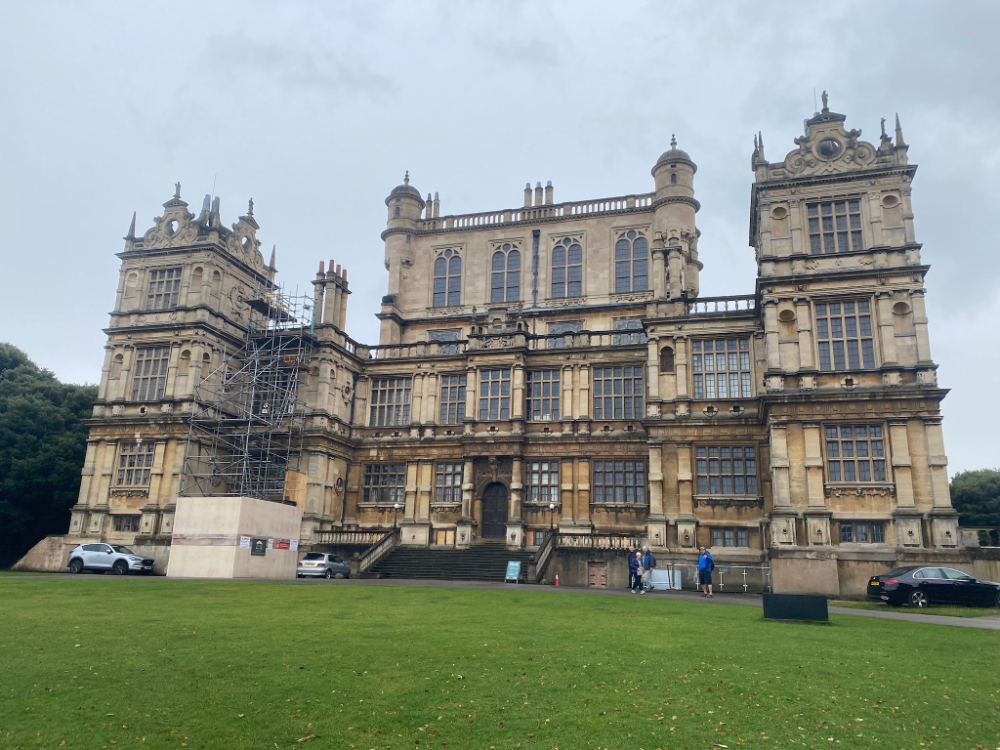
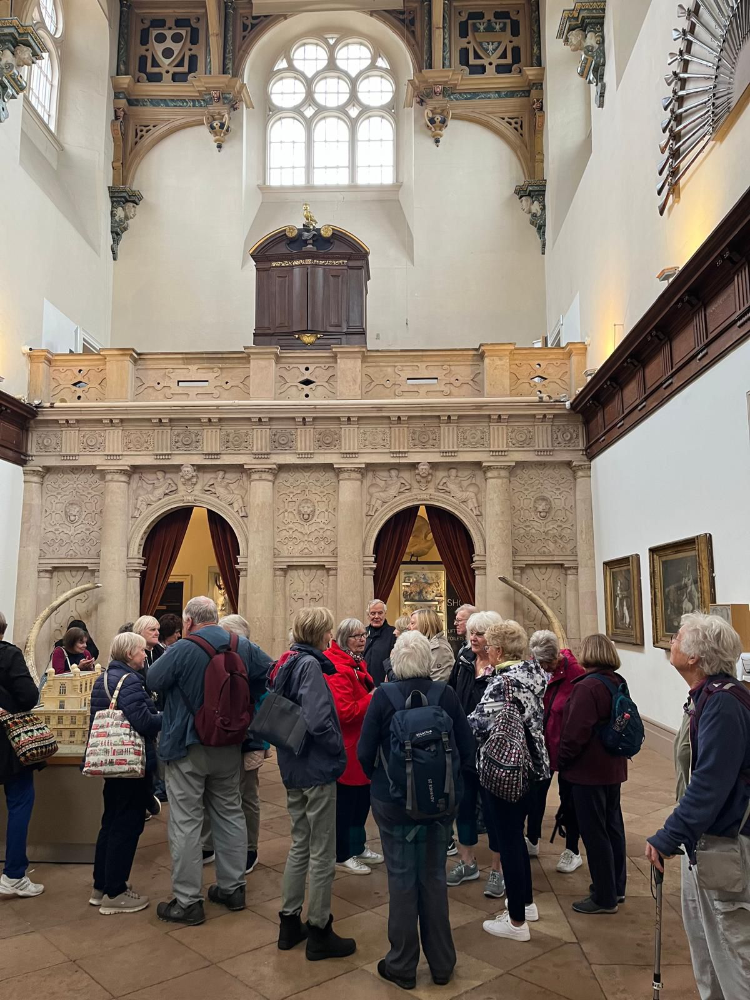
We were then welcomed by our guide for the tour (Sandra) who proceeded to give all of us a comprehensive warning about the dangers inherent in the tour - many steps of varying sizes, height, length, narrow spiral stairs etc etc. However, realising that the group were made of stronger stuff than the average visitor, the tour commenced in the main hall. The main interest for me were the displays of (Brown Bess) muskets on the walls (sorry, it’s my background)! We were informed that these were issued to the local militia during the riots of 1831. The main surprise in the room was that the organ in the Minstrel’s Gallery was original and had been played, amongst others, by George Frederic Handel (of Messiah fame).
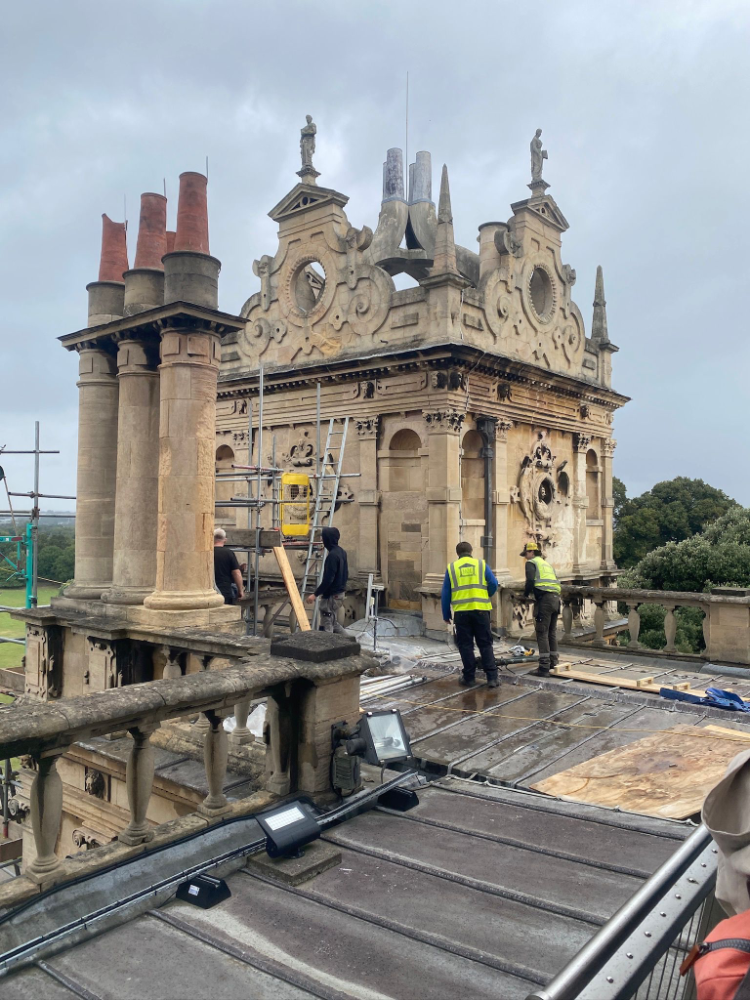
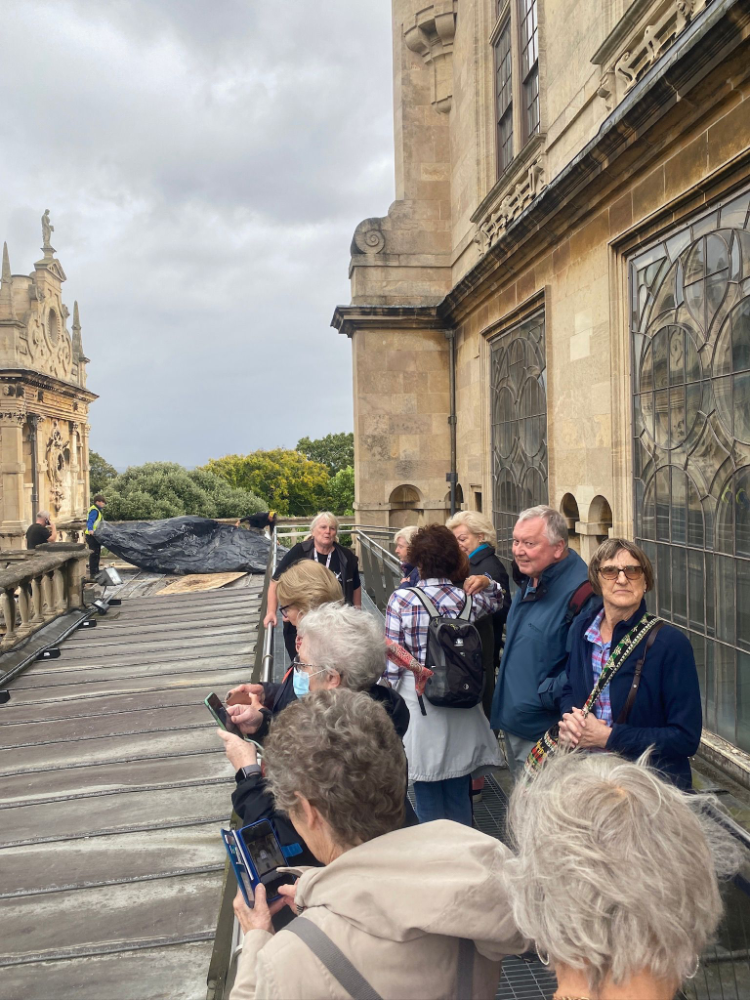
Making our way upstairs via aforesaid stairs, part of the roof and the spiral stair we ended up in the Prospect Room at the top of the Hall. This room has never been heated or had electric light and, owing to the problems of access for any ladies with the voluminous skirts of the period, I got the impression that the room became The Boy’s Room and who knows what went on there out of sight of the responsible members of society!
The next place of interest was down, down to the Outer Kitchen where we were regaled with interesting information by Sandra. We were told that the Posh People (PP) ate mainly meat with hardly any veg (I will go for that!) whilst the Hoi Polloi (HP) got the leftovers from the meat and entrails AND veg. We also learned the advantages of being “above the salt” and the fact that children didn’t get strong ale until they had turned five!
The chef was the epitome of spoilt staff. He was provided with accommodation, had a feather mattress and received the amazingly generous salary of £2 per YEAR. An expedition to the storage tunnels for the kitchen provisions was not for people of a nervous disposition.
We were then shown the bell room where the bells were operated by the PP upstairs by means of wire pulls which fed through the building. Each bell had a different ring so that listening staff would know who was being summoned. The advantage of this new development was that the HP no longer had to sleep where they could, within earshot of their masters, but could be relegated to the further distances in the hall preferably outside!
At the end of the guided tour most of us wandered around at random and visited rooms containing displays of rocks, animals, examples of taxidermy etc. By pure chance I came across an exhibition of miniatures by Willard Wigan. By miniature I mean tiny! A sculpture of the Last Supper was, like all the other exhibits, within the eye of a small needle and could only be viewed by means of microscope like optical devices. Each piece of work took anywhere between six weeks to six months to complete and required the artist to use a single hair to paint the item and required him to control his heart rate and breathing! For me this (temporary) exhibition was the highlight of the visit. I had never seen anything like it (and I have been around a fair time)!
My thanks to group members who organised the visit. A very interesting day out!